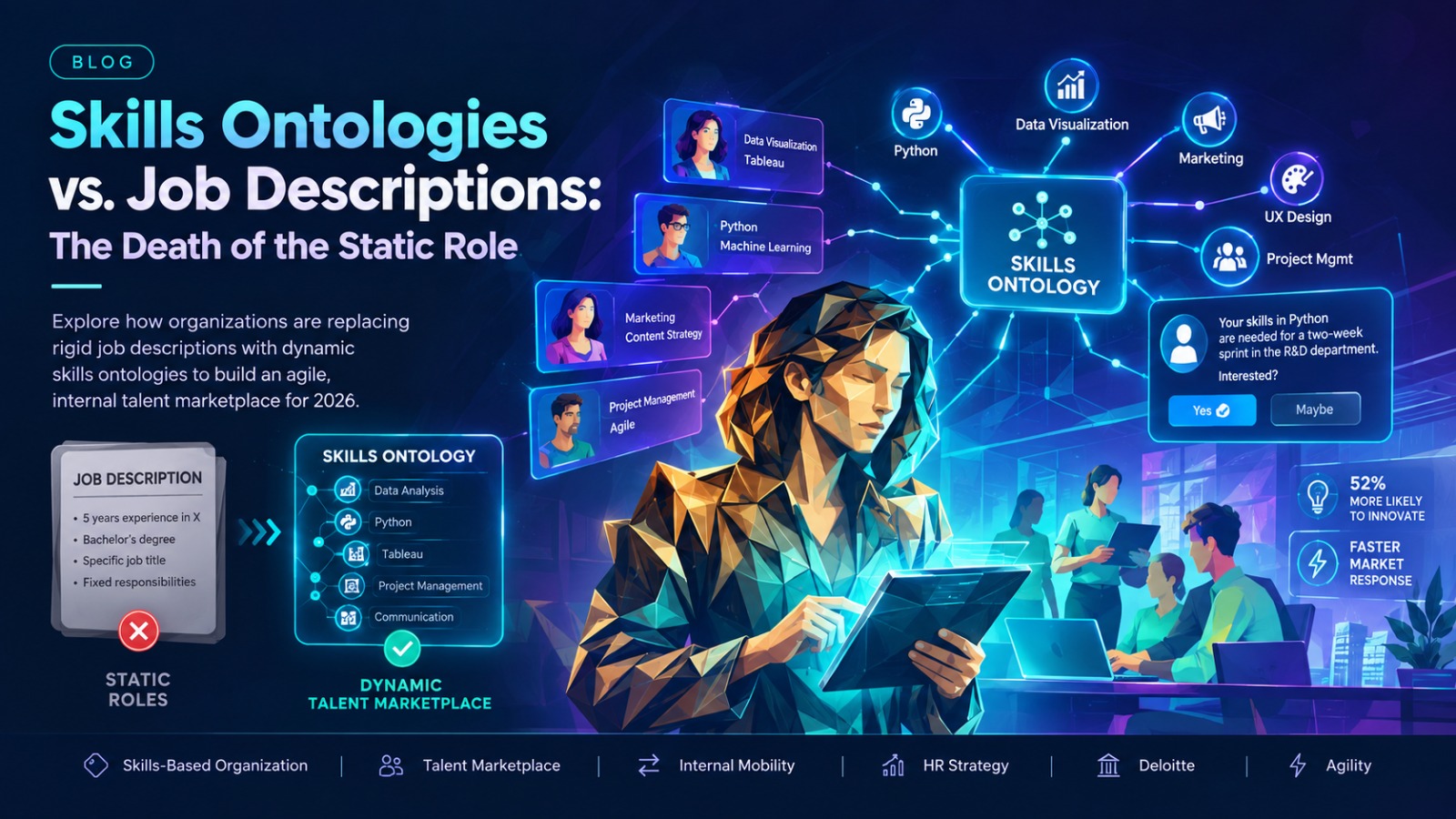
Look at any job description from 2019, and you will likely see a static list: "Must have 5 years of experience in X." It is a relic of an industrial-age mindset where jobs were boxes on an org chart and people were expected to stay in those boxes. In 2025, that box is disintegrating.
Welcome to the era of the Skills Ontology. Instead of focusing on rigid job titles, companies are building dynamic, interconnected databases of the skills their workforce possesses and the skills they need to acquire. Think of it as a "Spotify for talent." If a project in the marketing department needs someone with data visualization skills, the system doesn't look for a "Data Analyst" title; it scans the entire company for anyone who has listed "Tableau" or "Power BI" in their profile, regardless of their current role.
This shift is driven by the need for agility. Deloitte’s Human Capital Trends reports consistently highlight that skills-based organizations are 52% more likely to innovate and significantly faster at responding to market changes. By 2026, HR systems will function as internal talent marketplaces. Employees will receive notifications: "Your skills in Python are needed for a two-week sprint in the R&D department. Interested?" This democratizes opportunity and keeps employees engaged.
For HR professionals, this means abandoning the annual review that asks, "Did you meet your goals?" and replacing it with a continuous dialogue: "What skills did you learn? What do you want to learn next?" The job description isn't disappearing entirely, but it is becoming a fluid snapshot, not a permanent cage. The organization of the future is a living ecosystem of skills, not a collection of static roles.
Reader Comments (0)
Leave a Comment
Your email address will not be published. Required fields are marked *